
S&P Global Ratings has forecast India's economy to shrink by 5 per cent in the current fiscal. It, however, has projected GDP growth to be 8.5 per cent in 2021-22 and 6.5 per cent in 2022-23.

The economy faces more downside risks now as economic disruptions arising from the second wave are likely to stabilise only from July, warned the Swiss brokerage USB Securities. Last month, the brokerage had cut its GDP forecast by 150 bps to 10 per cent for FY22, which though is much higher than the consensus projections by others with some pegging it at as low as 8 per cent. Though adverse impacts on sequential growth is less severe than in the June 2020 quarter when it plunged by 23.9 per cent, as lockdowns are more targeted and localised and households and businesses have adjusted to the new normal now, still, it is increasingly possible that normalcy returns only by July as against our baseline assumption of June.

India's manufacturing sector activities eased slightly in February but firms were upbeat as they responded to increased new work intakes by stepping up production and purchasing activities, a monthly survey said on Monday. The seasonally-adjusted IHS Markit India Manufacturing Purchasing Managers' Index (PMI) fell marginally to 57.5 in February from 57.7 in January, indicating that even though the pace of growth eased from January it remained sharp in the context of historical data. The headline figure for February remained above its long-run average of 53.6, the survey noted. In PMI parlance, a print above 50 means expansion while a score below 50 denotes contraction.

Retail inflation dropped marginally to 7.01 per cent in June mainly due to slight easing in prices of vegetables and pulses, though it still remained above the Reserve Bank's comfort level for the sixth month in a row. The consumer price index (CPI) based inflation stood at 7.04 per cent in the preceding month of May and 6.26 per cent in June 2021. Inflation in the food basket in June 2022 was 7.75 per cent, compared to 7.97 per cent in the previous month, as per the National Statistical Office (NSO) data released on Tuesday.

While most economies contracted in the second quarter of 2020, the Chinese economy grew by 3.2 per cent.

No lives were lost after cyclone Biparjoy made landfall. Preparations for Biparjoy were not only extensive, they were also telecast far and wide. Ahead of the cyclone's landfall, Shyam G Menon observes there was considerable publicity on how much the government was geared up to face the storm and its aftermath.
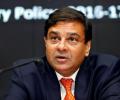
The RBI projection of 6.9 per cent GVA growth for the current fiscal comes on the back of the Economic Survey last week forecasting economic growth of 6.5 per cent.

The last date to apply for the September 2022 term of the programme is August 19, 2022.

'Given the 50 per cent or thereabouts increase in borrowing that has been announced, it is a reasonable estimate to say that at this time, an increase of 1.7-1.8 per cent on the 3.5 per cent budgeted fiscal deficit target is being anticipated,' Chief Economic Adviser Krishnamurthy Subramanian said on Friday.
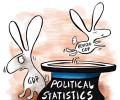
The SBI report, however, said the economic growth rate will pick up pace in 2020-21 to 6.2 per cent.

The country's gross domestic product (GDP) is expected to grow at around 18.5 per cent with an upward bias in the first quarter of the current financial year, according to SBI research report Ecowrap. This estimate is lower than the Reserve Bank of India's GDP growth projection of 21.4 per cent for the April-June quarter. "Based on our 'Nowcasting' model, the forecasted GDP growth for Q1 FY22 would be around 18.5 per cent (with upward bias)," the report said. Higher growth in Q1 FY22 is mainly on account of a low base.

When FM was that the third-quarter GDP data was not in line with his ministry's optimism, he had said he relied on the advice of his advisors.

While the US-Iran conflict leading to a spike in global oil prices and trade war between the US and the EU topped the chart with 25 per cent, other major risks to the global economy include coronavirus, debt burdens causing a recess across emerging markets and Hong Kong protests causing an exodus from Asia's biggest financial centre.
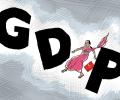
Moody's said the government will face challenges in achieving its deficit target for the fiscal year ending March 2021, amid persistent structural and cyclical headwinds to growth.

Former finance secretary Subhash Chandra Garg went on to say that the 2020-21 fiscal will go down in the history of India as the year when India got way-laid from its story of three decadal outstanding growth.

Finance Minister Nirmala Sitharaman has said the recent interest rate hike by the Reserve Bank was not surprising for her but the timing was, asserting that the rising cost of funds will not impact the government's planned infrastructure investments. For the first time since August 2018, RBI had on May 4 delivered a blunt 40 basis points increase in key repo rate to 4.40 per cent, and also hiked the cash reserve ratio by 50 basis points to 4.5 per cent after an unscheduled meeting of the rate setting panel, citing increased inflation pressures following the Ukraine war and the resultant spike in crude oil prices. Retail inflation printed at 6.9 per cent in March and the April reading is forecast to top 7.7 per cent.

Agriculture activity, according to recent channel checks by Prabhudas Lilladher, is expected to continue at a strong pace in FY22.

India's manufacturing sector activities improved in September as companies benefited from strengthening demand conditions amid the easing of COVID-19 restrictions, a monthly survey said on Friday. The seasonally adjusted IHS Markit India Manufacturing Purchasing Managers' Index (PMI) improved from 52.3 in August to 53.7 in September, indicating a stronger expansion in overall business conditions across the sector. The September PMI data pointed to an improvement in overall operating conditions for the third straight month. In PMI parlance, a print above 50 means expansion while a score below 50 denotes contraction.

In Q1, India's GDP shrank by a staggering 24 per cent year-on-year amid the imposition of one of the most stringent global nationwide lockdowns.

S&P Global Ratings on Monday said systemic risk in Indian banks is likely to remain high in the wake of the second wave of COVID-19 and high proportion of weak loans. S&P estimates the weak loans in banks at 11-12 per cent of gross loans.

'We will have to wait for one more year to cross the 7% mark, which should be possible in the absence of any disruptive reform,' points out CARE Ratings Chief Economist Madan Sabnavis.

'If the third wave of Covid infections is as bad as the second one, the market may get very polarised with a preference for blue-chips with low volatility.'

Tata Steel was the top gainer in the Sensex pack, rallying 3.23 per cent, followed by SBI, Yes Bank, Hero MotoCorp, ICICI Bank and Bharti Airtel.

The Centre's capital expenditure (capex) outlay for the April-June quarter (first quarter, or Q1) of 2022-23 (FY23) could be close to Rs 1.5 trillion, Business Standard has learnt. As a percentage of full-year capex Budget Estimates (BE) of Rs 7.5 trillion, this could be at similar levels to the trends in the past few fiscal years. It is in the July-September quarter (Q2) of FY23 that capex is expected to pick up, when a bulk of the long-term capex loans to states are expected to be expended.

Indian economy is expected to grow by 10 per cent or more in the current fiscal, and 8 per cent plus in the next fiscal year, Niti Aayog Vice-Chairman Rajiv Kumar said on Tuesday. Addressing a book launch event, Kumar further said that seven years of the Modi government has laid a strong economic foundation for businesses to thrive in India. "There was a hiccup (in economic growth) for two years due to COVID-19 pandemic.

'The outlook for private investment, which has been such a weak link for India for so long, remains challenging.'

In India, economic activity slowed substantially in 2019, with the deceleration most pronounced in the manufacturing and agriculture sectors, whereas government-related services sub-sectors received significant support from public spending, the Bank said.

Undeterred by the stock market volatility, uncertainty due to the Ukraine-Russia war and high inflation, equity mutual funds continue to remain attractive choice for investors for the 15th straight month, registering a net inflow of Rs 18,529 crore in May on robust SIP numbers. This was higher than Rs 15,890 crore net inflow in April, data from the Association of Mutual Funds in India (AMFI) showed on Thursday. Equity schemes have been witnessing net inflow since March 2021, highlighting the positive sentiment among investors.

India's manufacturing sector growth steadied in May, with new orders and production increasing at similar rates to those registered in the previous month, while demand showed signs of resilience and improved further in spite of another uptick in selling prices, a monthly survey said on Wednesday. The seasonally adjusted S&P Global India Manufacturing Purchasing Managers' Index (PMI) stood at 54.6 in May, little changed from 54.7 in April, pointing to a sustained recovery across the sector. The May PMI data pointed to an improvement in overall operating conditions for the eleventh straight month.

The year 2022 saw the Reserve Bank of India (RBI) start acting on the policy repo rate after a gap of two years. The six-member monetary policy committee of the RBI reduced interest rate sharply - by 115 bps - when Covid-19 struck in 2020. In March 2020, days after the nationwide lockdown was announced, MPC in an unscheduled meeting reduced the repo rate by 75 bps, followed by another 40 bps in May. Status quo was maintained for the next two years since the May repo rate hike.

After several years of downgrades to the country's medium-term growth outlook, the estimates are likely to be upgraded now, Credit Suisse said in a report. The country's economy is showing signs of bottoming out, it said. According to the report, the consensus forecasts of GDP growth for FY2022 over FY2020 stopped falling after October 2020 (currently at (-) 1 per cent). Analysts at Credit Suisse expect these estimates to be revised upwards.

With the world's worst outbreak of COVID pandemic stalling a nascent economic recovery, the government has begun assessing the impact of the second wave of infections on different sectors and may look at providing support at an appropriate time to segments requiring fiscal help. Some of the economic indicators, including the Goods and Services Tax (GST) collections, still provide confidence and incoming data will throw some more light on the state of the economy, sources said. Services sectors like hospitality, tourism and aviation which had just started recovering were hit hard by the second wave of COVID, the sources said, adding these segments might need some support on an urgent basis from the government.
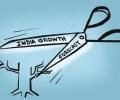
India's projected economic growth for 2022 has been downgraded by over two per cent to 4.6% by the United Nations, a decrease attributed to the ongoing war in Ukraine, with New Delhi expected to face restraints on energy access and prices, reflexes from trade sanctions, food inflation, tightening policies and financial instability, according to a UN report released on Thursday. The UN Conference on Trade and Development (UNCTAD) report downgraded its global economic growth projection for 2022 to 2.6 per cent from 3.6 per cent due to shocks from the Ukraine war and changes in macroeconomic policies that put developing countries particularly at risk. The report said while Russia will experience a deep recession this year, significant slowdowns in growth are expected in parts of Western Europe and Central, South and South-East Asia.
The laggards in the Sensex kitty were Vedanta, Tata Steel, M&M, HCL Tech, Bharti Airtel, Maruti Suzuki, L&T, Asian Paint and HDFC

Former President A P J Abdul Kalam kindly answered rediff.com's questions for an exclusive interview.
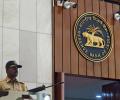
Reserve Bank of India (RBI) on Friday kept the benchmark interest rate unchanged at 4 per cent and decided to continue with its accommodative stance despite rising inflation. This is the 11th time in a row that the Monetary Policy Committee (MPC) headed by RBI Governor Shaktikanta Das has maintained the status quo. RBI had last revised its policy repo rate or the short-term lending rate on May 22, 2020 in an off-policy cycle to perk up demand by cutting the interest rate to a historic low.

The finance ministry said the sharp inflows last fiscal were due to the government's policy initiatives and economic recovery.

HDFC was the top loser in the Sensex pack, shedding over 2 per cent, followed by Axis Bank, Bharti Airtel, M&M, Reliance Industries, ICICI Bank, IndusInd Bank and Titan.

You will need a sharper eye for stock picking and a greater appetite for risk than most retail investors possess, recommends T N Ninan.
